
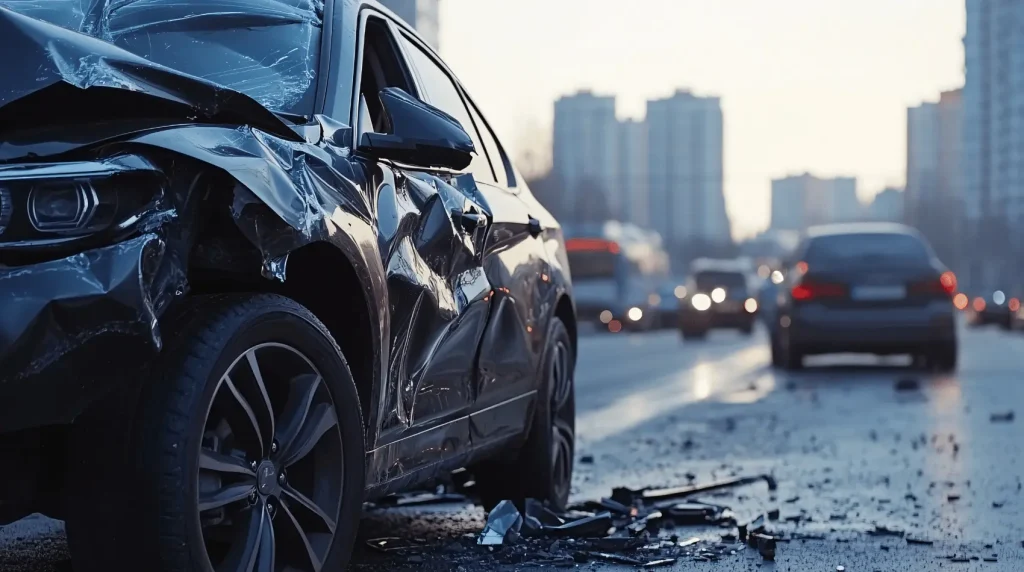
Rideshare services have become part of daily life across New Mexico. Yet when an Uber or Lyft trip ends in an accident, determining who pays and how to recover damages can be far from simple. Our team at Prince & Schmidt helps accident victims navigate these complicated claims. This guide explains liability, insurance coverage, and the legal steps that protect your rights.
How Liability Works in Rideshare Accidents
Who’s responsible often depends on whether the rideshare app was active at the time of the crash.
Uber and Lyft classify drivers by “periods” that define whether the driver was waiting for a fare, picking up a passenger, or had the app turned off. Each period triggers different levels of insurance coverage. Establishing which period applied at the moment of the crash is one of the first things we confirm when investigating a rideshare accident.
Because rideshare drivers are independent contractors rather than employees, the companies limit their direct liability. Victims must often pursue compensation through layered insurance policies, which may include the driver’s personal policy, Uber or Lyft’s coverage, and the victim’s own uninsured-motorist coverage.
Rideshare Insurance Coverage Explained
Coverage changes depending on the driver’s activity, with four key “periods” that determine responsibility.
Period 0 – App Offline
When a driver’s app is off, only personal auto insurance applies. Most individual policies exclude commercial use, leaving coverage gaps.
Example: A driver finishes a ride, turns off the app, and collides with another vehicle. Uber or Lyft coverage does not apply.
Period 1 – App On, Waiting for Request
Once the driver activates the app but has not accepted a trip, limited contingent liability coverage from the rideshare company’s policy applies:
- $50,000 per person for bodily injury
- $100,000 per accident for bodily injury total
- $25,000 for property damage
This coverage is secondary and only applies if the driver’s personal insurer denies the claim. It is the most common source of confusion and denial.
Period 2 – En Route to Pickup
After accepting a ride and while driving to collect a passenger, full commercial coverage begins:
- $1 million in liability coverage
- Uninsured/underinsured motorist protection included
- Primary coverage, not contingent
Period 3 – Passenger in Vehicle
When a passenger is on board, the same $1 million policy applies, along with collision and comprehensive coverage for the vehicle. If another driver is at fault and lacks adequate insurance, Uber or Lyft’s uninsured/underinsured motorist (UM/UIM) coverage — protection that pays when the at-fault driver has little or no insurance — still covers passengers and drivers.
The Insurance Gaps That Catch Many Drivers Off Guard
Exclusions in standard insurance policies leave both drivers and passengers vulnerable.
Personal auto insurers usually exclude coverage for “carrying passengers for hire.” Drivers who skip a rideshare endorsement or fail to inform their insurer risk losing all coverage when logged into the app.
Financed vehicles add another complication. Using a car for commercial purposes can violate loan terms, leading to denied claims or even repossession. When both the personal and commercial insurers deny responsibility, victims may face unpaid medical bills and repair costs while insurers debate liability.
Who You Can Hold Liable After a Rideshare Accident
Responsibility depends on who caused the crash and whether the rideshare company’s policies contributed to it.
You can hold multiple parties liable, including:
- The rideshare driver, if they were careless or distracted.
- Another motorist, if that driver caused the collision.
- Uber or Lyft, in limited cases, such as negligent hiring or unsafe app design that encourages distracted driving.
Under New Mexico’s comparative-negligence law, fault can be shared among the drivers involved in a crash. Each party’s compensation is reduced by their percentage of responsibility. This rule rarely affects passengers, who are almost never found at fault, but it can impact how much the rideshare driver or another motorist can recover if both contributed to the accident. For example, a $100,000 award becomes $80,000 if one driver is found 20 percent at fault.
Typical scenarios:
- Passenger injured in rideshare: Uber/Lyft’s $1 million policy applies.
- Pedestrian or motorist hit by a rideshare: Coverage depends on the driver’s app status.
- Driver injured by someone else: Rideshare UM/UIM policy may apply when the app is on.
What to Do After a Rideshare Accident in New Mexico
The steps you take immediately after the crash can make or break your claim.
- Ensure safety and get medical care. Call 911, accept evaluation, and keep all medical records.
- Confirm app status. Ask the driver if the app was on and note or take a photo of it. This determines which policy applies.
- Gather evidence. Take photos, obtain witness contact information, and record vehicle information.
- Notify insurers. Report the incident to Uber or Lyft through the app, the driver’s insurer, and your own carrier if you have UM/UIM coverage.
- Contact a rideshare accident attorney. Avoid recorded statements until legal counsel reviews your case.
How to Maximize Your Settlement
Comprehensive documentation and patience often lead to stronger results.
Damages You May Recover
- Medical expenses, including future care
- Lost wages or reduced earning capacity
- Pain and suffering
- Property damage
- Permanent disability or disfigurement
- Emotional distress
Tactics Insurers Use to Reduce Payouts
- Offering quick settlements before injury evaluations are complete
- Arguing you share blame
- Disputing medical treatment as unnecessary
- Contesting which coverage period applied
Building a Strong Case
Successful claims rely on evidence such as:
- Medical records and physician statements
- Accident reconstruction or expert analysis
- Proof of lost income
- Digital evidence from the app or GPS logs
Our firm works to secure and preserve this information quickly to ensure no opportunity for compensation is lost.
New Mexico Laws You Should Know
A few key state rules shape every rideshare injury claim.
- Comparative Negligence: You can recover damages even if you are partly responsible (NMSA 1978, § 41-3A-1).
- Statute of Limitations: Most injury claims must be filed within three years of the accident. Waiting too long may result in losing your right to recover.
- Minimum Insurance Requirements: New Mexico requires 25/50/10 coverage, but serious accidents often exceed those limits. Maintaining your own UM/UIM policy offers vital protection.
Choosing the Right Rideshare Accident Lawyer
Experience and local knowledge make a measurable difference in complex claims.
It’s essential to work with attorneys who understand how insurance companies operate and can navigate New Mexico’s legal system effectively. Local representation ensures familiarity with state traffic laws, area courts, and the adjusters who handle these cases, helping move claims forward efficiently.
Questions to Ask During Consultation
- How many rideshare cases have you handled?
- What results have you achieved in similar matters?
- Do you work on a contingency fee basis?
- How do you approach settlement versus trial?
Warning Signs
Avoid lawyers who promise fast settlements, are unclear about fees, or have limited experience with rideshare litigation.
Why Use Prince & Schmidt
Our firm combines in-depth insurance knowledge with decades of personal injury experience.
We have represented accident victims throughout New Mexico, negotiating with major insurers and taking cases to trial when necessary. Clients choose us because we:
- Understand how rideshare coverage overlaps and conflicts.
- Know the pressure tactics insurers use to minimize payouts.
- Operate on a contingency basis — there are no fees unless we win.
- Maintain offices in Santa Fe and Albuquerque for statewide service.
- Provide free, no-obligation consultations.
Don’t Navigate Complex Rideshare Insurance Alone
Rideshare crashes involve overlapping insurance policies and companies that prioritize profits over victims. Our attorneys know how to untangle coverage disputes and build a strong case for maximum recovery.
Contact Prince & Schmidt today for a free consultation. With us, you pay no fees unless we win. We have offices in Santa Fe and represent New Mexico residents in Santa Fe, Albuquerque, Taos, Las Vegas, and surrounding areas. We are ready to help you with your rideshare claim.
Frequently Asked Questions About Rideshare Accidents
1. Who pays my medical bills after an Uber or Lyft accident in New Mexico?
Medical bill payment depends on the rideshare driver’s app status and insurance coverage. If the app was on during the accident, Uber or Lyft’s insurance may cover medical expenses up to policy limits ($1 million when en route or with a passenger). Your health insurance, PIP coverage, or Med-Pay can provide immediate payment while the liability claim is resolved. In New Mexico, you can also pursue the at-fault driver’s insurance directly.
2. Do I need a lawyer for an Uber or Lyft accident?
While not legally required, rideshare accident cases involve complex insurance disputes between multiple parties—the driver’s personal insurer, Uber or Lyft’s commercial policy, and potentially other drivers’ coverage. Insurance companies often deny claims or offer low settlements to unrepresented victims. An experienced rideshare attorney can navigate coverage disputes, determine which policy applies, and typically recovers significantly more compensation than victims handling claims alone.
3. How much is my rideshare accident claim worth?
Rideshare accident settlements vary based on injury severity, medical costs, lost wages, and pain and suffering. Minor injury claims may settle for $10,000-$50,000, while serious injuries involving surgery, permanent disability, or long-term care can reach hundreds of thousands or exceed the $1 million policy limits. New Mexico’s comparative negligence law means your compensation is reduced by your percentage of fault, if any.
4. What if I was a passenger injured in an Uber or Lyft accident?
Passengers have the strongest protection in rideshare accidents. Uber and Lyft’s $1 million policy covers passenger injuries regardless of who caused the accident—whether the rideshare driver, another motorist, or shared fault. Passengers are rarely found at fault, so comparative negligence typically doesn’t reduce their compensation. You can pursue claims against the rideshare policy and any at-fault third party’s insurance.
5. Should I accept the settlement offer from Uber or Lyft’s insurance?
Never accept a rideshare settlement without consulting an attorney, especially if offered quickly after the accident. Insurers often make lowball offers before you’ve completed treatment or understand the full extent of injuries. Early settlements may not cover future medical care, ongoing therapy, or long-term disability. Once you accept and sign a release, you cannot pursue additional compensation, even if injuries worsen.
6. What if the other driver who hit my Uber/Lyft has no insurance?
When an uninsured driver causes your rideshare accident, Uber and Lyft provide uninsured/underinsured motorist (UM/UIM) coverage up to $1 million when the app was active. This protection covers passengers and the rideshare driver. If the app was off, your personal UM/UIM coverage applies. New Mexico has a relatively high rate of uninsured drivers, making UM/UIM coverage essential for full protection.
7. How long do I have to file a rideshare accident claim in New Mexico?
New Mexico’s statute of limitations allows three years from the accident date to file a personal injury lawsuit (NMSA 1978, § 37-1-8). However, you should report the accident to Uber or Lyft immediately through the app and notify all relevant insurers within days. Waiting too long can result in denied claims, lost evidence, and difficulty securing witnesses. While you have three years to sue, insurance claims should begin immediately.
8. Can I sue Uber or Lyft directly in New Mexico?
Directly suing Uber or Lyft is difficult because drivers are independent contractors, not employees. However, you can file claims against their $1 million commercial insurance policies when the driver was logged into the app. In rare cases involving negligent hiring, inadequate background checks, or dangerous app features that encourage distracted driving, direct liability claims against the company may be possible. Most successful claims pursue the available insurance coverage rather than corporate liability.
9. What if the Uber or Lyft driver was at fault?
When the rideshare driver causes the accident, the available coverage depends on app status. If a passenger was on board or the driver was en route to pickup, Uber or Lyft’s $1 million liability policy covers injuries to passengers and other parties. If only the app was on (Period 1), only $50,000/$100,000/$25,000 contingent coverage applies—significantly less protection that may not fully compensate serious injuries.
10. What if my injuries didn’t appear until days after the rideshare accident?
Delayed injury symptoms are common after rideshare accidents, especially for whiplash, concussions, soft tissue damage, and internal injuries. Seek medical attention immediately when symptoms appear, even if days or weeks after the crash. Inform your doctor the symptoms relate to the accident. Delayed treatment can allow insurers to argue injuries weren’t accident-related. New Mexico law still protects your claim as long as you file within the three-year statute of limitations.

